


Lot n° 44
Estimation :
35000 - 40000
EUR
Result with fees
Result
: 45 500EUR
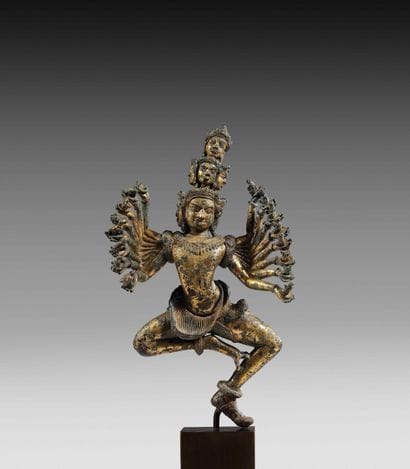
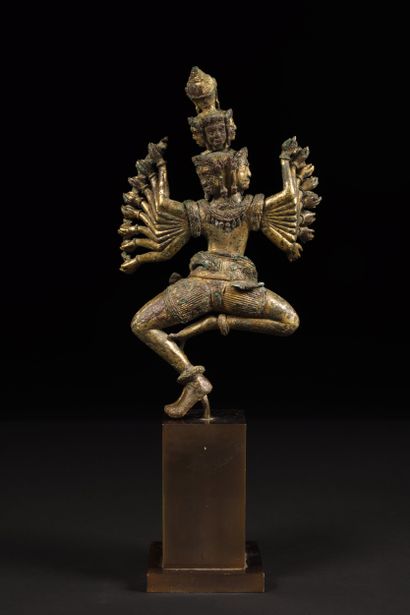
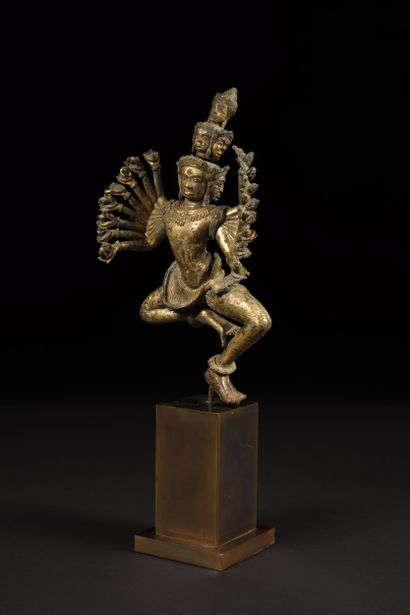
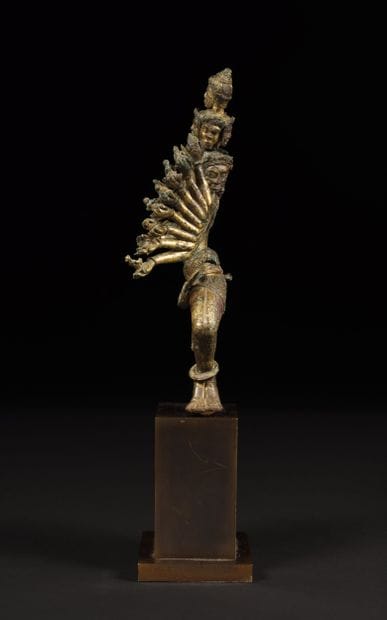
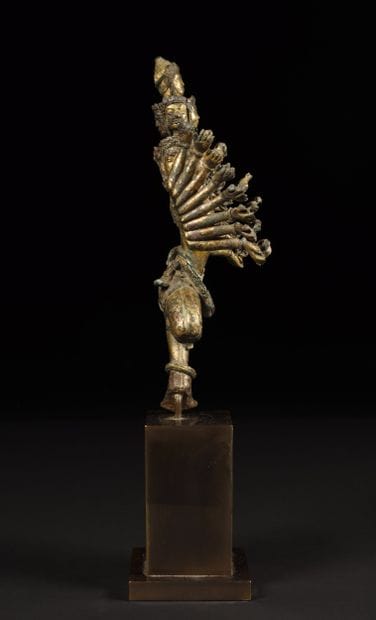
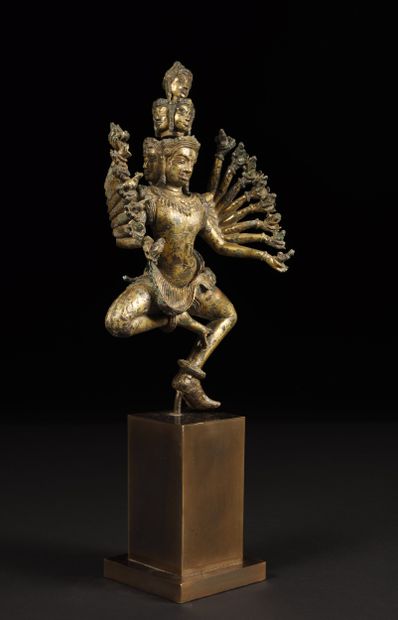
Hevajra - Lot 44
Hevajra
Khmer art, second half of the 12th century
Cambodia or neighboring countries
Gilded bronze. H. 25 cm
Provenance
- Christie's Amsterdam sale, November 3, 1998,
lot 152
- Acquired at this sale by its current
owner
- Featured in the exhibition "Bronzes royaux d'Angkor
- Un art du divin" held at the Musée Guimet (Paris)
from April 30 to September 8, 2025, reproduced in the
catalog under no. 96
Bibliography:
- Pierre Baptiste and Thierry Zéphir: "L'Art Khmer
dans les collections du musée Guimet", Réunion des
des Musées Nationaux 2008
- Helen I. Jesup and Thierry Zéphir: "Angkor and ten centuries of
and Ten Centuries of Khmer Art", exhibition catalog
held at the Grand Palais, (Paris) from January 31
to May 26, 1997 and at the National Gallery of Art
(Washington) from June 29 to September 28, 1997.
- Pierre Baptiste, David Bourgarit, Brice Vincent and
Thierry Zéphir "Bronzes royaux d'Angkor - Un art du
divine", catalog of the exhibition held at the Musée
Guimet (Paris) from April 30 to September 8, 2025 A major divinity of Tantric Buddhism, the god Hevajra traditionally
traditionally referred to in Khmer inscriptions as Vajrin, i.e. "he who possesses the vajra".
who possesses the vajra", is represented here in his most classical guise as
Kapâladhara "cranial cap bearer".
Standing in a dancing posture, ardhaparyanka, he leans on his two left legs
left legs, the two right ones raised. Note here the subtlety of Khmer
Khmer artists in the discreet demarcation of the two pairs of legs.
the two pairs of legs.
Initially, he had to trample on the four Maras, or main obstacles to enlightenment.
from attaining enlightenment, whose representation was to be fixed to the lotiform base
which has now disappeared.
The eight pairs of outstretched arms terminate in hands supporting sixteen
skull caps containing animals and deities. In the right hands
the right hands are an elephant, a horse, a donkey, an ox
a camel, a man, a fabulous animal (stronger than the elephant) called
sarabha, and a cat. In the left hands, the skullcaps house Dhanada, the god of wealth
Antaka, or Yama, the judge of the dead, the sun, the moon and the four elements
elements, Tejas (fire), Vayu (air), Varuna (water), and Prthvi (earth).
The god is adorned with eight heads, arranged in three superimposed registers.
The Buddha, Lokeshvara and Vajrapani are represented in the first register.
four jina associated with their respective orients: Akshobhya to the east, Ratnasambhava to the south
to the South, Amitabha to the West, Amoghasiddhi to the North, and in the third register,
the fifth jina, Vairocana, associated with the zenith. This arrangement of heads
symbolizes the universal nature of Hevajra's Buddha nature.
Beyond the beautiful dancing posture and the subtle arrangement of the eight pairs of arms
arms framing the bust and head, it's worth noting the rarity of Khmer metal sculptures
that have retained their original gilding.
Bibliography
For other gilded representations of Hevajra
- Miniature Hevajra shrine H. 20.5 cm from the Musée National du Cambodge, Phnom-Penh
Phnom-Penh (Inv. Ga 2494) reproduced under no. 102 in the exhibition catalog
"Angkor et dix siècles d'Art Khmer" exhibition held at the Grand Palais, Paris, from January 31 to
26 May 1997 and at the National Gallery of Art (Washington) from June 29 to
September 1997.
- Hevajra H. 15.5 cm in the Musée Guimet (Inv. MA 849) reproduced by Pierre
Baptiste and Thierry Zéphir in "Khmer Art in the Musée Guimet collections
Guimet" Réunion des Musées Nationaux 2008, number 92 page 303.
- Hevajra H. 31.5 cm, no. 163, Christie's Amsterdam sale, December 10, 2002
- Hevajra H. 22.5 cm from the Musée National du Cambodge, Phnom-Penh (Inv. Ga 4170)
reproduced under no. 97 in the exhibition catalog "Bronzes royaux d'Angkor - Un art du divin".
Un art du divin", catalog of the exhibition held at the Musée Guimet (Paris) from April 30 to
April to September 8, 2025:
My orders
Sale information
Sales conditions
Return to catalogue